Summary of this article
Tosashimizu Port is located in Tosashimizu City, Kochi Prefecture, at the southwestern tip of Shikoku, Japan. It is a fishing port known for bonito and sodabushi fish flakes, and the gateway to Cape Ashizuri. Tosashimizu is the birthplace of John Manjiro, and the city is home to the John Manjiro Museum, a reconstruction of his childhood home, and a statue of Manjiro at Cape Ashizuri. Access is via Kochi Ryoma Airport followed by roughly three hours by rental car. The best seasons to visit are spring and autumn, when the climate is stable.
Tosashimizu Port lies at the southwestern tip of Shikoku, in Kochi Prefecture, Japan. It is a natural harbor that has flourished for centuries on bonito fishing and the production of sodabushi fish flakes, and it serves as the gateway to Cape Ashizuri. Above all, Tosashimizu is the birthplace of John Manjiro (Nakahama Manjiro), the central figure of the 2028 NHK Taiga drama “John Man.”
This guide from PortAI, an independent maritime and ferry information platform, covers Tosashimizu Port and the surrounding region: its fishing culture, the John Manjiro heritage sites, Cape Ashizuri, access routes, and the best times to visit. It is intended for international travelers who wish to explore the home region of the man who became a bridge between Japan and the wider world.
Summary of this article
Tosashimizu Port is located in Tosashimizu City, Kochi Prefecture, at the southwestern tip of Shikoku, Japan. It is a fishing port known for bonito and sodabushi fish flakes, and the gateway to Cape Ashizuri. Tosashimizu is the birthplace of John Manjiro, and the city is home to the John Manjiro Museum, a reconstruction of his childhood home, and a statue of Manjiro at Cape Ashizuri. Access is via Kochi Ryoma Airport followed by roughly three hours by rental car. The best seasons to visit are spring and autumn, when the climate is stable.
What is Tosashimizu Port?
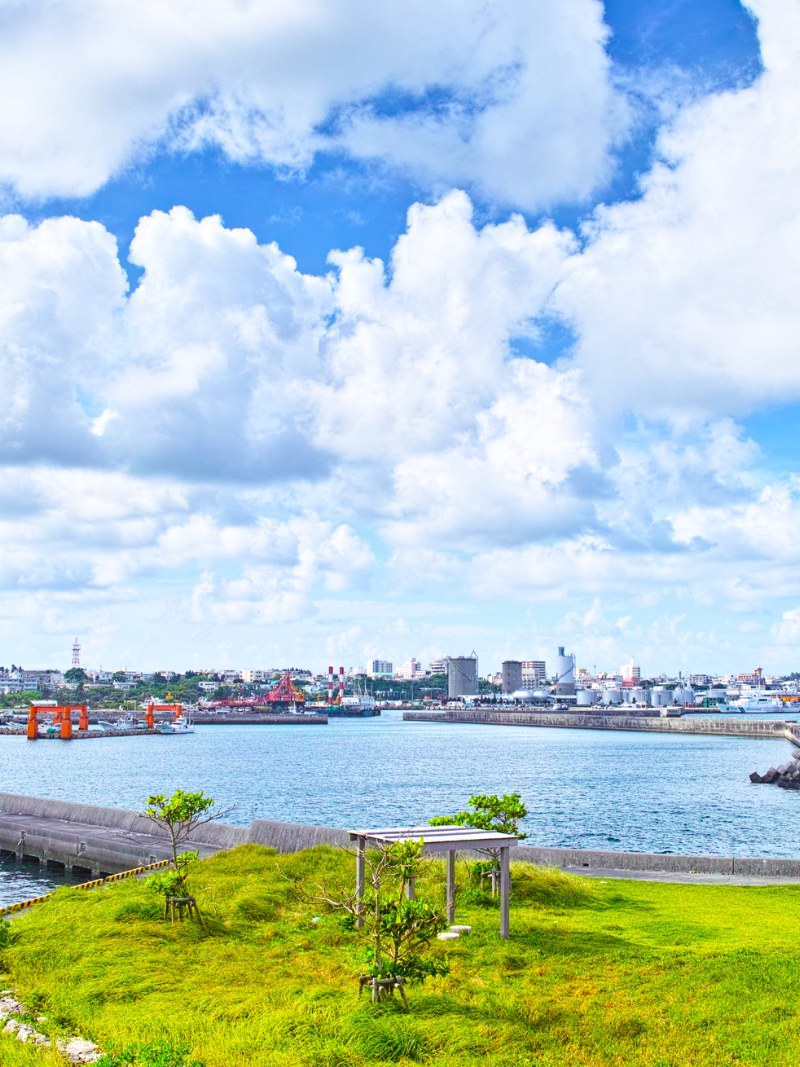
Tosashimizu Port is a fishing harbor located in Tosashimizu City, Kochi Prefecture, near the southwestern tip of the island of Shikoku. Facing the Pacific Ocean, it is a natural harbor that has supported the local fishing industry for generations. The waters off Tosashimizu are enriched by the Kuroshio Current, which carries bonito and other fish into the region, and the port has long been a base for the fishing that defines the town’s economy and culture.
The town of Tosashimizu is known for two principal products of the sea. The first is bonito, the fish at the heart of Tosa cuisine. The second is sodabushi, dried fish flakes made from a relative of the bonito, which are used to make the flavorful broth that is fundamental to Japanese cooking. Tosashimizu is one of Japan’s leading producers of sodabushi, and the drying racks of fish that can be seen in the town are part of its working landscape.
Beyond its fishing industry, Tosashimizu holds a special place in Japanese history as the birthplace of John Manjiro. The city’s identity is shaped by this connection, and visitors come to Tosashimizu both for its natural scenery and to follow the footsteps of the fishing-village boy who became a bridge between Japan and the United States.
Tosashimizu Port overview
Tosashimizu Port is a fishing harbor in Tosashimizu City, Kochi Prefecture, near the southwestern tip of Shikoku, facing the Pacific Ocean. Enriched by the Kuroshio Current, it has long been a base for bonito fishing. The town is one of Japan’s leading producers of sodabushi dried fish flakes, and it is known nationally as the birthplace of John Manjiro.
Tosashimizu as a fishing harbor
Tosashimizu Port is a natural harbor on the Pacific coast of southwestern Shikoku that has supported the local fishing industry for generations. The town is known for two principal products of the sea: bonito, the fish at the heart of Tosa cuisine, and sodabushi, dried fish flakes used to make Japanese cooking broth. The drying racks of fish are part of the town’s working landscape.
John Manjiro heritage in Tosashimizu
For travelers interested in John Manjiro, Tosashimizu City is the essential destination. It was here, in the village of Nakanohama, that Manjiro was born in 1827 to a poor fishing family. The city preserves and presents the story of its most famous son through several key sites.
The John Manjiro Museum is the central facility. Through documents, exhibits, and displays, it presents Manjiro’s entire life: his shipwreck and drift to Torishima in 1841, his rescue by an American whaling ship, his education in Fairhaven, Massachusetts, his perilous return to Japan, and his contributions during the Bakumatsu period. A visit to the museum provides the historical context that gives meaning to the other sites.
In the Nakanohama district, a reconstruction of Manjiro’s childhood home allows visitors to experience the environment of the fishing village where he spent his early years. The modest dwelling and the view of the Pacific from the settlement evoke the origins of his remarkable story. At Cape Ashizuri, a statue of John Manjiro gazes out across the ocean that shaped his fate. Together, these sites form the core of any John Manjiro pilgrimage. For the full story of his life, see the PortAI guide John Manjiro: Life and Voyages.
John Manjiro sites in Tosashimizu
Tosashimizu City is the essential destination for John Manjiro travelers. The John Manjiro Museum presents his entire life through documents and exhibits. In the Nakanohama district, a reconstruction of his childhood home conveys the fishing-village environment of his youth, and at Cape Ashizuri a statue of Manjiro gazes out over the Pacific. Together these three sites form the core of a John Manjiro pilgrimage.
Sodabushi production in Tosashimizu
Tosashimizu is one of Japan’s principal producers of sodabushi, dried fish flakes made from a relative of the bonito and used to make the broth fundamental to Japanese cooking. The production of sodabushi is a traditional industry that has shaped the working landscape of the town, with racks of drying fish a familiar sight throughout Tosashimizu.
Cape Ashizuri and its natural scenery
Cape Ashizuri, located within Tosashimizu City, is one of the most dramatic natural landmarks of southwestern Shikoku. The cape juts into the Pacific Ocean, and its cliffs, rising to around 80 meters, form a sweeping coastal landscape. The area is part of the Ashizuri-Uwakai National Park, and its subtropical vegetation and rugged scenery are protected.
The landmark of Cape Ashizuri is its white lighthouse, which stands on the cliffs against the backdrop of sky and sea. From the observation deck at the cape’s tip, visitors can take in a panorama of roughly 270 degrees, with the horizon curving gently across the open ocean. The cape is also home to the John Manjiro statue and to a temple of the Shikoku pilgrimage circuit, blending natural scenery with historical and spiritual depth.
Near Cape Ashizuri lies Hakusan Domon, a natural sea cave formed by the erosion of the granite coast over a vast span of time. The arch of rock, framed by blue sea and sky, is one of the most photographed scenes in the Tosashimizu area. The full details of Cape Ashizuri and its surroundings are covered in the PortAI guide to the cape, part of the John Manjiro series.
Cape Ashizuri
Cape Ashizuri in Tosashimizu City juts into the Pacific with cliffs rising to around 80 meters, within the Ashizuri-Uwakai National Park. Its landmark white lighthouse stands on the cliffs, and the observation deck offers a panorama of roughly 270 degrees. The cape is home to the John Manjiro statue and a Shikoku pilgrimage temple, and the nearby Hakusan Domon is a natural sea cave formed by ocean erosion of the granite coast.
Reconstruction of Manjiro’s childhood home
In the Nakanohama district of Tosashimizu, a reconstruction of John Manjiro’s childhood home allows visitors to experience the environment of the fishing village where he spent his early years. The modest dwelling and the view of the Pacific from the settlement evoke the origins of his remarkable story, which began when he was shipwrecked at age 14 in 1841.
The fishing culture of Tosashimizu
The fishing culture of Tosashimizu is inseparable from the identity of the town. As a port enriched by the Kuroshio Current, Tosashimizu has built its livelihood and its traditions around the sea, and the visitor who looks beyond the scenery will find a working culture with deep roots.
Bonito is the fish at the heart of Tosashimizu. The town is known for shimisaba, a local mackerel brand, as well as for bonito, and the fresh catch of the local waters appears on tables throughout the area. The most famous way to enjoy bonito in the Tosa region is as katsuo no tataki, in which the surface of the fish is seared over a flame of burning straw while the interior remains close to raw. This dish is a centerpiece of Tosa cuisine.
Tosashimizu is also one of Japan’s principal producers of sodabushi, the dried fish flakes used to make broth. The production of sodabushi is a traditional industry that has shaped the working landscape of the town, with racks of drying fish a familiar sight. This combination of fresh fish, traditional processing, and the cuisine built upon them gives Tosashimizu a fishing culture that rewards the curious traveler. The wider fishing culture of southwestern Kochi, including the neighboring port of Kure, forms a connected maritime cultural region nourished by the same Kuroshio Current.
Tosashimizu fishing culture and cuisine
Tosashimizu’s fishing culture centers on bonito, enjoyed most famously as katsuo no tataki, in which the fish is seared over a straw flame while the interior remains close to raw. The town is also one of Japan’s principal producers of sodabushi dried fish flakes, with racks of drying fish a familiar part of the working landscape. Tosashimizu and the neighboring port of Kure form a connected maritime cultural region nourished by the Kuroshio Current.
Hakusan Domon sea cave
Near Cape Ashizuri lies Hakusan Domon, a natural sea cave formed by the erosion of the granite coast over a vast span of time. The arch of rock, framed by blue sea and sky, is one of the most photographed scenes in the Tosashimizu area and a highlight of the Ashizuri peninsula’s coastal scenery.
Access to Tosashimizu
Tosashimizu City lies near the southwestern tip of Shikoku, and reaching it requires some travel time, which is best understood before planning a trip. The gateway from outside Shikoku is Kochi Ryoma Airport.
From the Tokyo area, the standard route is a flight from Haneda Airport to Kochi Ryoma Airport, which takes about one hour and twenty minutes. From Kochi Ryoma Airport to Tosashimizu City, the journey by rental car takes roughly three hours. Renting a car at the airport and driving southwest offers the greatest freedom and efficiency.
Travelers using public transport can take the Tosa Kuroshio Railway from Kochi Station toward Nakamura Station, then continue by local bus into Tosashimizu City; the journey takes roughly four to five hours including connections. From the Kansai region, the standard route combines the shinkansen to Okayama, a limited express to Kochi, and onward travel to Tosashimizu. Within the city and the Ashizuri peninsula, a rental car is the most convenient means of travel, as public bus services are limited in frequency.
How to reach Tosashimizu
From the Tokyo area, the standard route is a flight from Haneda Airport to Kochi Ryoma Airport, about one hour and twenty minutes, followed by roughly three hours by rental car. Travelers using public transport take the Tosa Kuroshio Railway from Kochi Station toward Nakamura Station, then a local bus into Tosashimizu City, roughly four to five hours including connections. Within the city and the Ashizuri peninsula, a rental car is the most convenient option.
Katsuo no tataki, the signature dish
The most famous way to enjoy bonito in the Tosa region is as katsuo no tataki, in which the surface of the fish is seared over a flame of burning straw while the interior remains close to raw. This searing gives the fish a fragrant flavor while preserving a fresh texture. Katsuo no tataki is a centerpiece of Tosa cuisine and a dish travelers to Tosashimizu should not miss.
Best time to visit Tosashimizu
The timing of a visit to Tosashimizu affects the experience considerably. The town faces the Pacific and enjoys a mild climate, but each season has its own character.
Spring through early summer, from March to June, is one of the best periods to visit. The climate is stable, clear days are common, and the cliffs of Cape Ashizuri and the views of the Pacific can be enjoyed comfortably. Autumn, from late October through November, is also recommended, as the air becomes clear and the ocean views are at their finest, with fewer visitors than in peak season.
From July through October, Tosashimizu is exposed to the influence of typhoons. When a typhoon approaches, road restrictions around Cape Ashizuri and the suspension of sightseeing boats can occur, so travelers visiting in this period should check weather forecasts carefully. For those interested in bonito, the fish has two seasons: the lighter “first bonito” of late spring and early summer, and the richer “returning bonito” of autumn, when the fish has built up its fat.
Best season for Tosashimizu
Spring through early summer, March to June, offers a stable climate ideal for enjoying Cape Ashizuri and the Pacific views. Autumn, late October through November, brings clear air and fewer visitors. July through October is exposed to typhoons, which can cause road restrictions and suspension of sightseeing boats. Bonito has two seasons: the lighter “first bonito” of late spring and the richer “returning bonito” of autumn.
Bonito seasons in Tosa
Bonito, the fish at the heart of Tosashimizu cuisine, has two seasons. The lighter “first bonito” arrives in late spring and early summer as the fish migrate north on the Kuroshio Current. The richer “returning bonito” arrives in autumn, when the fish have built up their fat. Visitors can enjoy different flavors of bonito depending on the season of their visit.
Tosashimizu and the 2028 Taiga drama
The broadcast of the NHK Taiga drama “John Man” in 2028 represents a major opportunity for Tosashimizu. As the birthplace of John Manjiro, the city stands at the center of the drama’s story, and the broadcast is expected to draw heightened attention to the town and its heritage sites.
Past NHK Taiga dramas have repeatedly drawn increased numbers of visitors to the regions they portray. For Tosashimizu, a town facing the challenges of population decline common to rural Japan, the broadcast offers the prospect of revitalization through the asset of its historical identity.
For travelers, the period before the broadcast, through 2027, is likely to offer a more relaxed experience. Tosashimizu has a limited number of accommodations, and securing lodging may become difficult during the broadcast year of 2028. Those who wish to explore Tosashimizu and follow John Manjiro’s footsteps with ease may find it advisable to visit before the broadcast begins.
Tosashimizu Port and the Pacific
The relationship between Tosashimizu Port and the Pacific Ocean defines the character of the town. The port faces the open sea, and the waters off southwestern Kochi are among the richest fishing grounds in Japan, sustained by the warm Kuroshio Current that sweeps up from the south.
It was this same ocean that carried the 14-year-old John Manjiro away from his home waters in 1841. The fishing boats of the Tosashimizu region, suited to coastal work, ventured onto a sea that could turn dangerous without warning. Manjiro’s drift and the decade abroad that followed began on the waters visible from Tosashimizu, and this gives the port a place in history beyond its role as a fishing harbor.
Today, Tosashimizu Port continues to function as a working fishing harbor, while also serving as a point of access to the natural and historical attractions of the Ashizuri peninsula. The rhythms of the fishing port, the catch brought ashore, and the boats setting out and returning are part of the living scenery that visitors encounter. The port is both a place of work and a window onto the maritime history that shaped the region.
Tosashimizu Port and John Manjiro’s origins
The waters off Tosashimizu, sustained by the warm Kuroshio Current, are among Japan’s richest fishing grounds. It was this same ocean that carried the 14-year-old John Manjiro away from his home waters in 1841, beginning the drift and decade abroad that followed. Tosashimizu Port remains a working fishing harbor and a point of access to the Ashizuri peninsula’s natural and historical attractions.
Related guides from PortAI
This article is part of the PortAI media tie-in series on John Manjiro and the maritime heritage connected with his life. A fully detailed Japanese-language edition of this article is available at 土佐清水港と周辺港湾完全ガイド. For the life of John Manjiro himself, see the English pillar guide John Manjiro: Life and Voyages. For the maritime routes connected with his drifting site, see the Japanese guides to the Ogasawara Maru and Chichijima Island access.
Frequently asked questions
Where is Tosashimizu Port?
Tosashimizu Port is in Tosashimizu City, Kochi Prefecture, near the southwestern tip of the island of Shikoku, Japan. It faces the Pacific Ocean and is the gateway to Cape Ashizuri.
What is Tosashimizu known for?
Tosashimizu is known for bonito fishing and as one of Japan’s principal producers of sodabushi dried fish flakes. It is also nationally known as the birthplace of John Manjiro, the central figure of the 2028 NHK Taiga drama “John Man.”
What John Manjiro sites are in Tosashimizu?
The John Manjiro Museum presents his entire life through documents and exhibits. The Nakanohama district has a reconstruction of his childhood home, and Cape Ashizuri has a statue of Manjiro. These three sites form the core of a John Manjiro pilgrimage.
How do I get to Tosashimizu?
From the Tokyo area, the standard route is a flight from Haneda Airport to Kochi Ryoma Airport, about one hour and twenty minutes, followed by roughly three hours by rental car. Public transport via the Tosa Kuroshio Railway and local bus takes roughly four to five hours.
What is Cape Ashizuri?
Cape Ashizuri is a dramatic cape in Tosashimizu City within the Ashizuri-Uwakai National Park, with cliffs rising to around 80 meters. It features a white lighthouse, an observation deck with a 270-degree panorama, and the John Manjiro statue.
What food should I try in Tosashimizu?
The signature dish is katsuo no tataki, bonito seared over a flame of burning straw while the interior remains close to raw. Tosashimizu is also known for shimisaba mackerel and for sodabushi dried fish flakes.
When is the best time to visit Tosashimizu?
Spring through early summer, March to June, and autumn, late October through November, offer the most stable climate. July through October is exposed to typhoons, which can affect roads and sightseeing boats.
How does the 2028 Taiga drama affect Tosashimizu?
As the birthplace of John Manjiro, Tosashimizu is central to the 2028 NHK Taiga drama “John Man.” The broadcast is expected to draw increased visitors, and traveling before the broadcast, through 2027, may offer a more relaxed experience.
Tosashimizu and the 2028 Taiga drama
As the birthplace of John Manjiro, Tosashimizu is central to the 2028 NHK Taiga drama “John Man.” The broadcast is expected to draw increased numbers of visitors to the town and its heritage sites. Because Tosashimizu has limited accommodation, traveling before the broadcast, through 2027, is likely to offer a more relaxed experience.
Conclusion
Tosashimizu Port is a town where fishing culture, natural scenery, and history come together at the southwestern tip of Shikoku. As the birthplace of John Manjiro, it carries a story that reaches across the Pacific, and its bonito, its sodabushi, its dramatic Cape Ashizuri, and its John Manjiro heritage sites together make it a rewarding destination.
As an independent maritime and ferry information platform, PortAI presents Tosashimizu Port alongside the wider John Manjiro story. With the NHK Taiga drama “John Man” approaching in 2028, we hope this guide helps international travelers discover the home region of the man who became a bridge between Japan and the world.
About the images in this article
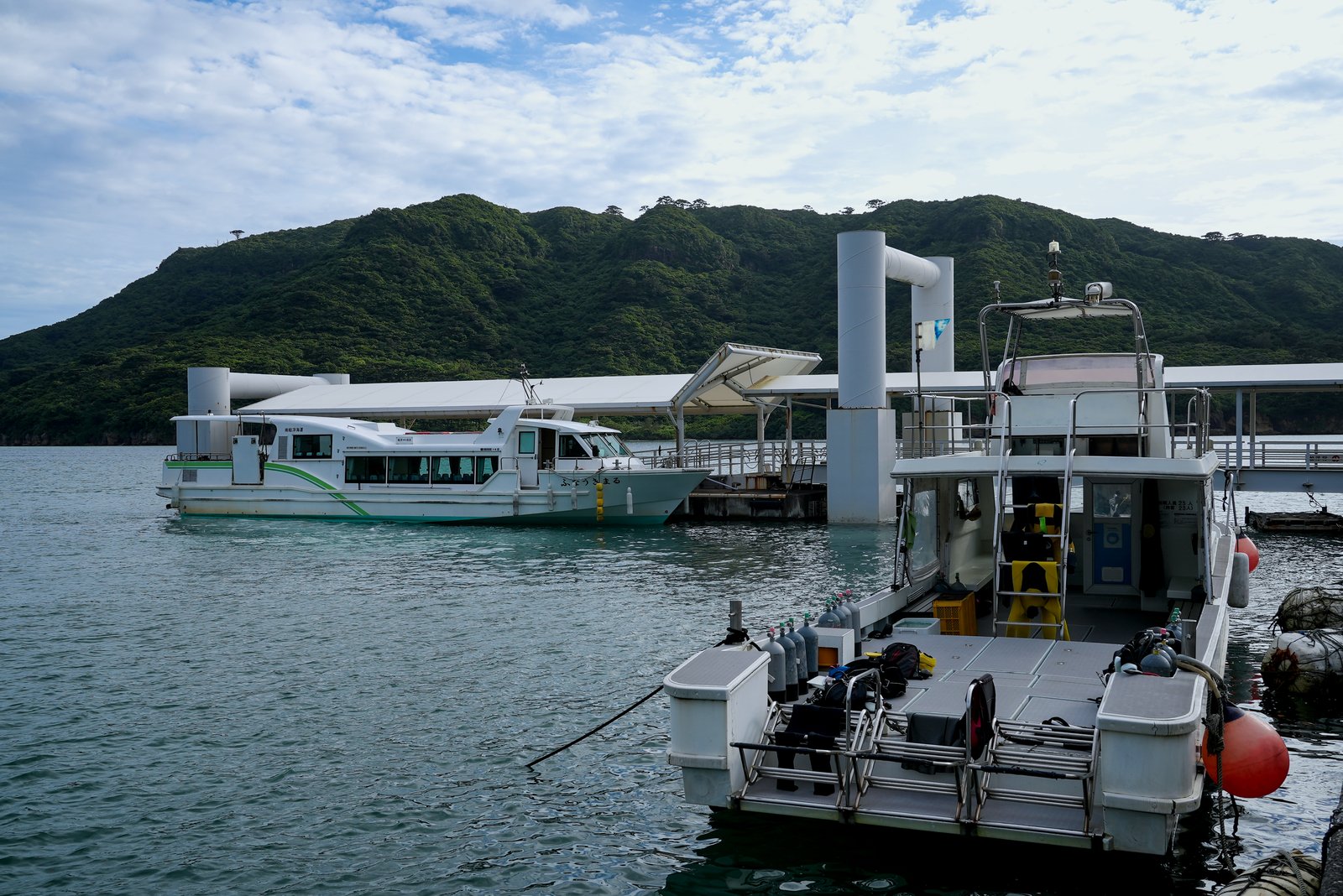
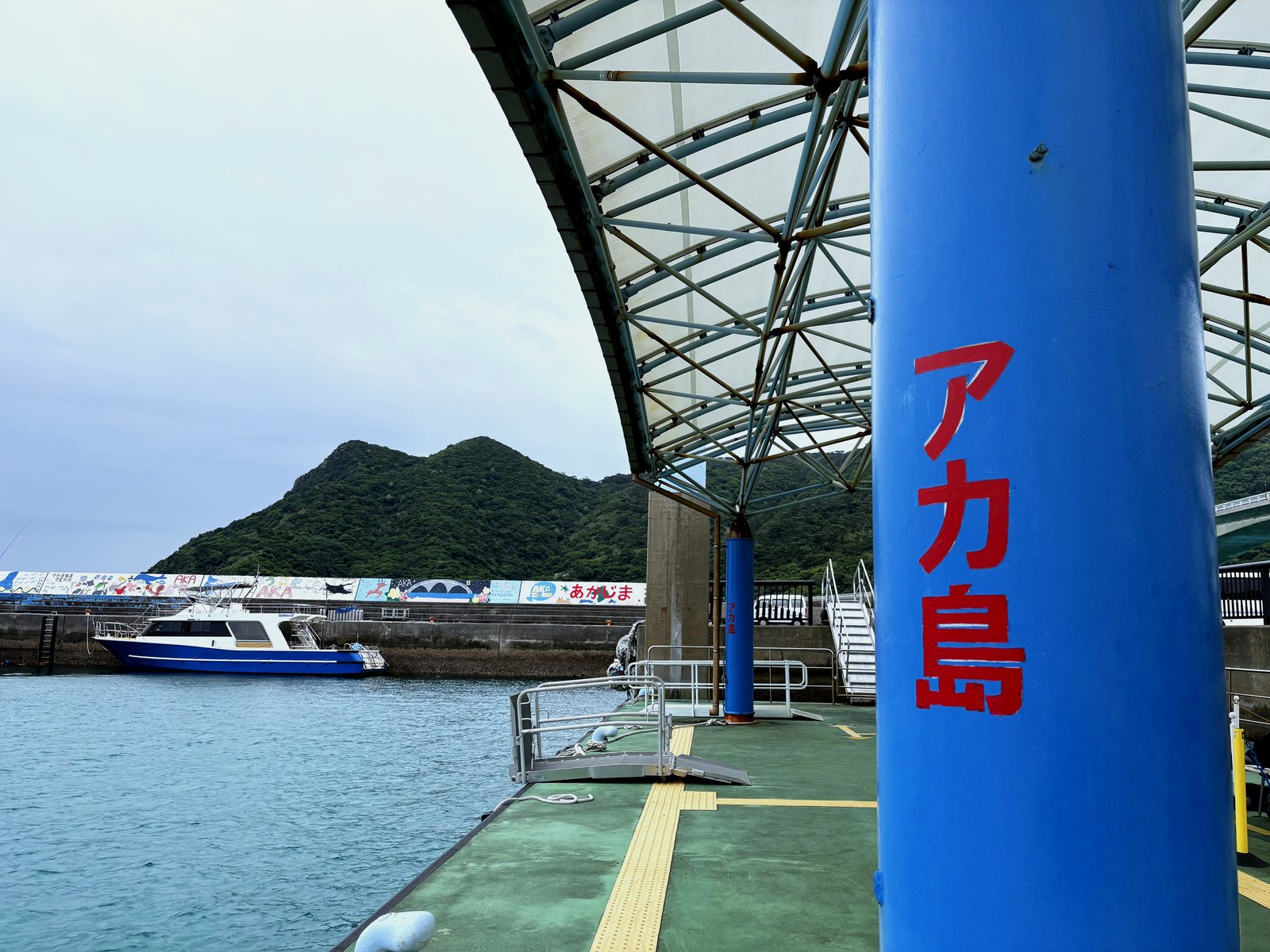
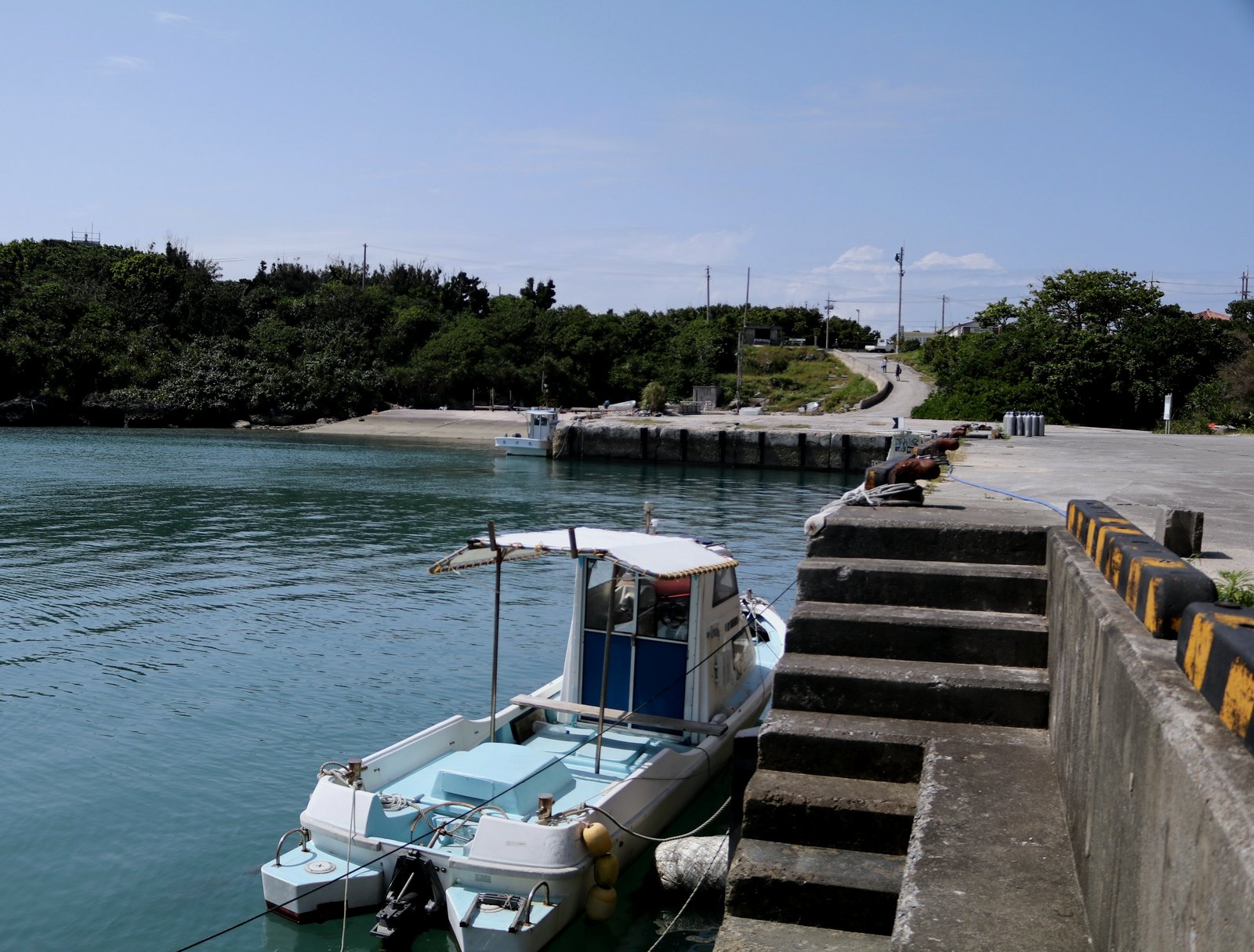
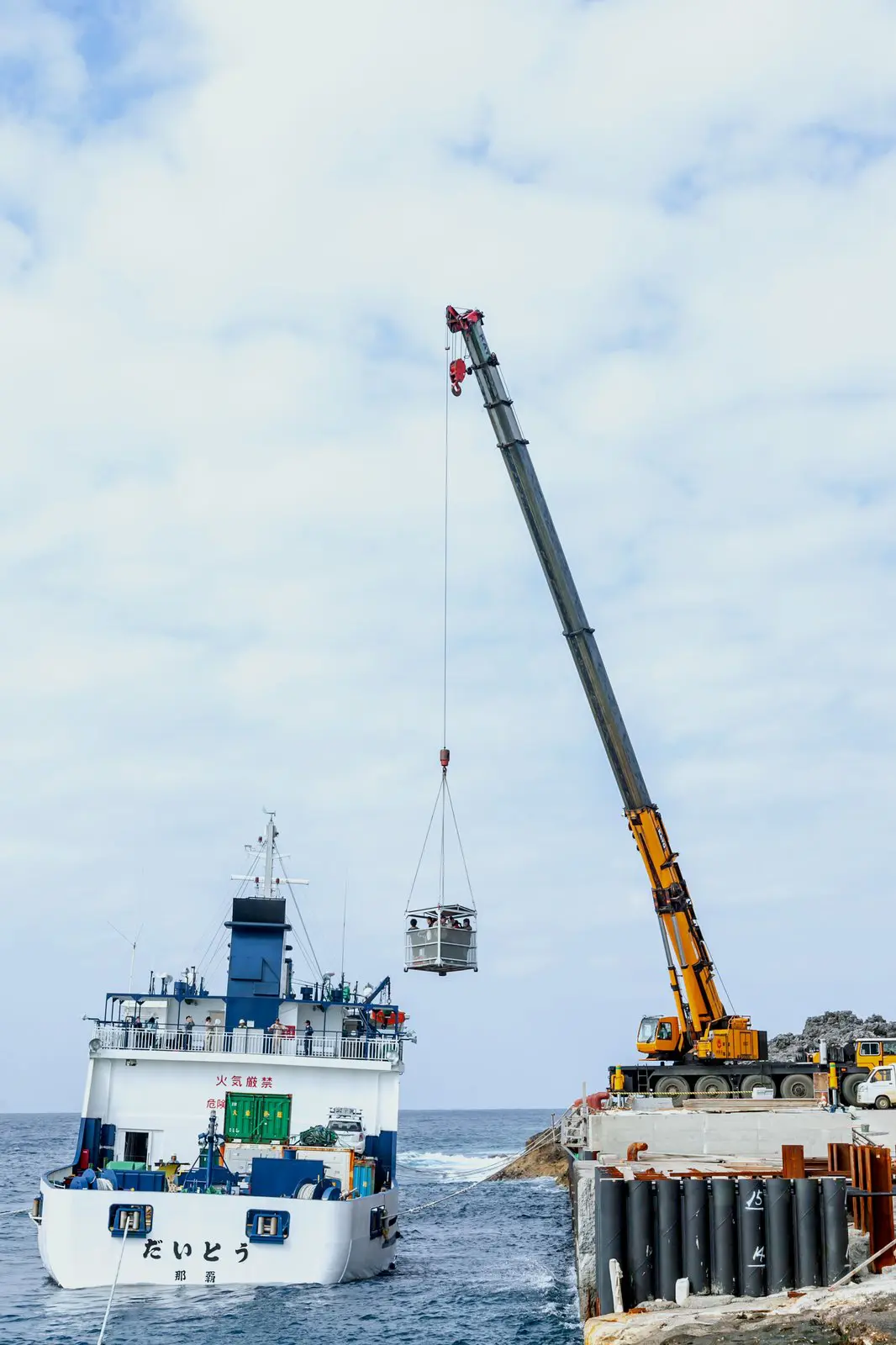
Unless otherwise noted, the images in this article are representative images and may differ from the actual locations or facilities described.
About travel and Taiga drama information
Access routes and travel times in this article are general estimates as of May 2026 and may vary with traffic and season. Please confirm the latest opening hours, fees, and transport schedules with official sources. Information about the NHK Taiga drama “John Man” is based on announcements published by NHK as of May 2026.
※Images used are for illustrative purposes only.
See also: Higa Fishing Port Guide
See also: Hakuai Fishing Port Guide
See also: Tonaki Fishing Port Guide
See also: Nakazato Fishing Port Guide
See also: Okinawa Ferry Discount Coupon Guide
関連記事: Motobu Port Guide [2026] | Jetfoil Access to Churaumi Aquarium & JUNGLIA
関連記事: 石垣港離島碼頭完整指南(2026年版)|全7條航線票價·時刻表·停車場·交通方式
関連記事: 이시가키항 이도 터미널 완전 가이드(2026년판)|전 7노선 요금·시각표·주차장·교통편
関連記事: Tokashiki Port Guide [2026] — Naha’s Closest Kerama Island, Aharen Beach Access
関連記事: Tomarin Terminal Guide [2026] — Naha’s Ferry Terminal for Kerama, Kumejima & All Okinawa Islands